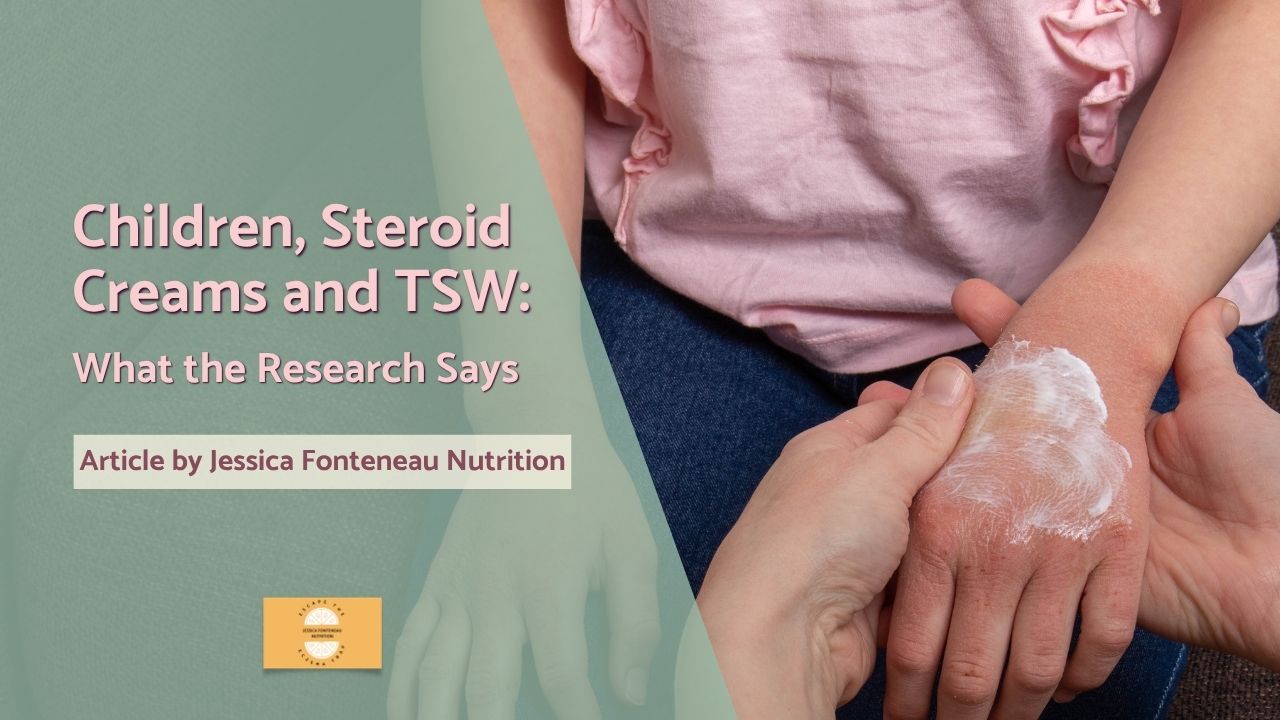
A clinical perspective for parents. What the evidence shows, what it doesn’t, and the questions worth asking when steroid creams stop being a short-term tool and start becoming a long-term plan.
If your child has eczema/dermatitis, you have almost certainly been prescribed a topical steroid at some point. Possibly several. Possibly over a long time. And if you are reading this, it is probably because something about that pattern has started to feel less like a treatment and more like a permanent fixture.
I want to begin by saying clearly: this article is not here to make you afraid of steroids. Used appropriately, they are an extremely useful tool, and parents who have followed their GP’s instructions have done everything right. The questions worth asking are not about whether they have been used, but about how they continue to be used, and whether anyone has stopped to ask why the flares keep coming back.
In my clinic, the pattern I see most often is this: a child is prescribed a steroid cream for a flare, the flare settles, and at the next appointment the cream is continued “to keep things calm.” Six months later, it is still being applied. A year later, the dose has crept up, or the potency has. Two years later, the family is told the eczema is just severe and that steroids are the only thing that control it. Nobody has investigated what is actually driving the inflammation.
Core idea — Topical steroids are a tool, not the solution. They are designed to bring down active inflammation in the short term, while the underlying drivers are identified and addressed. When they become the long-term plan in their own right, the strategy has moved on from treatment to maintenance, and it is this part of the plan that way of thinking deserves a little more consideration.
The two ways topical steroids get used
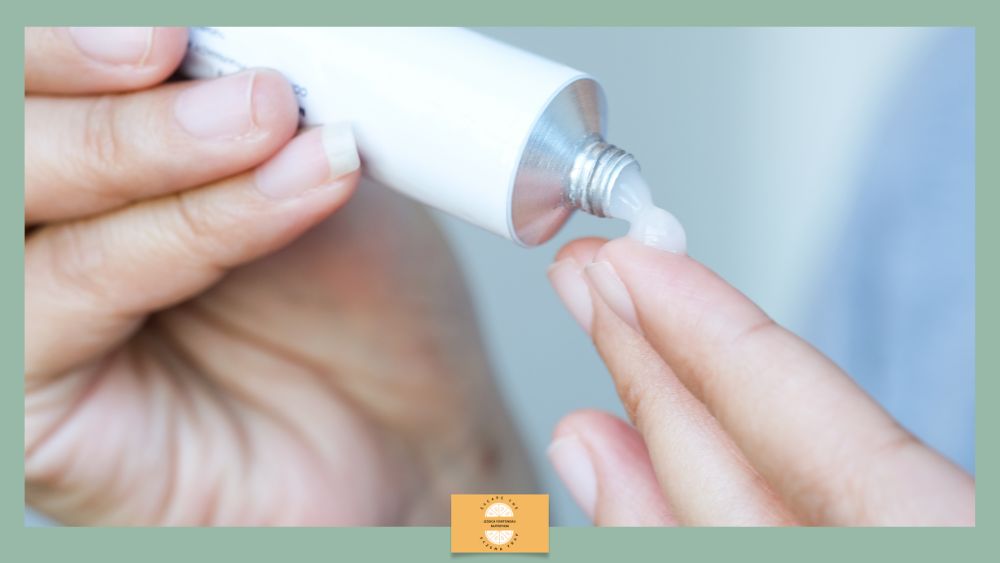
There is a meaningful clinical difference between targeted, short-term use and indefinite “preventative” application, and it is worth holding the two apart in your mind.
Targeted, short-term use
A flare appears. A steroid is applied for a defined period, typically a few days to a couple of weeks, to bring the inflammation down. Once the skin has settled, the steroid is stopped, and the focus shifts to gentler day-to-day care. This is the use the safety evidence is largely built around, and on this footing the research is broadly reassuring.
Long-term, preventative or maintenance use
A steroid is applied continuously, or on a fixed schedule (for example twice weekly to “problem areas”), often for months or years on end. Not because the skin is actively inflamed, but to stop it becoming inflamed. This pattern is increasingly common, and it is where the questions about safety, dependency and underlying drivers really sit. There isn’t as much research to support genuinely long-term use in children as most parents are led to believe.
The point is not that one is right and the other wrong. The point is that they are different clinical decisions, with different risk profiles, and they should be talked about as such.
What the research actually says
I want to walk you through the three concerns parents most often raise with me - skin thinning, cortisol suppression, and dependency — and explain what the evidence base looks like in each. The headline is that the picture is more nuanced than either of the two extremes you may have encountered online and I think it is critically important to be balanced in this potentially emotive topic.
Skin thinning
This is the worry parents tend to raise first, and on this point the evidence is genuinely reassuring when steroids are used appropriately. Multiple paediatric studies have looked specifically for skin atrophy in children using mild and moderate potency creams, and the rates are very low.1 Across a five-year follow-up of more than a thousand children, only one case of skin thinning was identified.2 Australasian consensus reviews have reached similar conclusions: appropriate use does not, on the available data, appear to cause meaningful atrophy in children.3
So that is wonderfully reassuring. But, the qualifier is the word appropriate — mild to moderate potency, on appropriate sites, for defined periods. The studies were not built around years of continuous high-potency use, and so the conclusions cannot be safely extrapolated in that context.
Cortisol and the HPA axis
The hypothalamic–pituitary–adrenal (HPA) axis is the body’s stress and cortisol-regulation system. Topical steroids are absorbed through the skin into the bloodstream, and at sufficient dose they can suppress this system, in effect telling the body it does not need to make its own cortisol because it is being supplied externally.
In children, this matters more than it does in adults for a simple anatomical reason: children have a much larger surface area relative to their body weight. The same volume of cream covers proportionally more skin and produces proportionally higher systemic absorption. The clinical literature has acknowledged this for decades4, early studies demonstrated that potent topical steroids could reduce plasma cortisol in children even when used as directed5, and although the more recent evidence suggests that clinically significant HPA suppression is uncommon with mild to moderate potency creams used appropriately,6 the available data on long-term mid-to-high potency use in children is genuinely limited.7
“Uncommon in the studies we have” is not the same as “unlikely in your child after three years of daily application.”
The question of dependency
This is the area where the evidence base is, frankly, the most sparse, and that absence is itself telling.
A 2017 review specifically searched the published literature for cases of classic topical steroid withdrawal in children. It found none.
Zero formally published paediatric case studies.
What it did find, when researchers looked beyond the formal literature, was twenty-seven children with the pattern, identified through patient communities and social media, and several hundred reports of related steroid-induced skin reactions in children.8
A 2019 case series subsequently followed ten children through the tapering off process and reported that all of them ultimately improved, but the recovery was measured in months, not days, and required substantial clinical and family support.9
What this means in practice: the question of whether children can become dependent on topical steroids has not been studied properly.
The absence of a large evidence base is not evidence of absence, it is evidence that nobody has yet looked.

Why TSW in children is so frequently dismissed
When parents do raise the possibility of topical steroid withdrawal in their child, they are often told that it does not exist, that the rebound flare is the original eczema returning, or that the right answer is to resume the steroid for longer. There are three reasons this happens, and they warrant being considered more:
- The first is the one we have just covered: the formal paediatric literature is sparse, so a clinician searching the standard databases will, in good faith, find very little.
- The second is that the rebounding pattern, redness that spreads beyond the original site, intense burning rather than itching, paradoxical worsening when the steroid is stopped, looks superficially like uncontrolled eczema, and the default response is therefore to treat it as such.10
- The third is that children cannot articulate the burning-versus-itching distinction in the way adults can, which is one of the clearest diagnostic clues.
There has, however, been one significant shift recently. In a meaningful step towards formal recognition, the United States announced dedicated ICD-10 diagnostic codes for topical steroid withdrawal syndrome in 2026 — codes L30.6 and T49.0X5S — due to come into effect in 2027.
Whilst the UK has not yet followed suit, this represents a genuine change in how the condition is officially categorised, and reflects a body of clinical and patient evidence that is no longer reasonable to dismiss outright.
What this means for you, in practice
I am not asking parents to throw away their steroid creams. I am asking them to use them with the same intention they would apply to any other medicine: as a defined intervention with a defined endpoint, supported by an investigation into why the underlying problem keeps returning.
A short list of questions worth raising with your child’s GP or dermatologist:
- What potency are we actually using, and on which areas of the body?
- What is the plan for stepping down once the flare has settled, not just for this flare, but as a default approach?
- Have we ever investigated what might be triggering the flares in the first place, dietary, environmental, gut-related, stress-related?
- If we are now using steroids continuously rather than reactively, when did that change in protocol happen, and was it a deliberate decision?
- What would the plan look like if we wanted to reduce reliance on the cream over the next six to twelve months?
None of these are confrontational questions. They are the questions a thoughtful clinician will be glad you asked, because they reframe the conversation away from “which cream, how often” and back towards “what is actually going on with this child’s skin.”
Where nutritional therapy fits in
My work begins where the steroid prescription leaves off, with the question of what is driving the inflammation in the first place. In children, that conversation typically involves the gut microbiome, the integrity of the skin barrier, the role of specific food sensitivities, the immune patterning that has developed in early life, and the nutrient status that supports healthy skin repair.
None of this replaces appropriate medical care. It sits alongside it, and aims to reduce how often the skin gets to the point of needing steroid intervention at all.
For children who are already in a long-term steroid pattern, the work is gentler and slower: building skin resilience first, addressing the underlying drivers in parallel, and only then, in close coordination with the prescribing clinician, thinking about what reducing reliance on the cream might look like. There is no rush, and there is absolutely no place for stopping abruptly.
The bottom line
Topical steroids, used appropriately, are not the enemy. They have a genuine and useful role in calming acute flares so that the underlying work can begin. The concern is not their use but their position in the plan: when they have moved from short-term tool to long-term plan, that shift deserves a proper conversation about why the inflammation keeps returning, about what else might be driving it. And about whether the current approach is the one your child should still be on in a year, or two, or five from now.
Parents who are asking these questions are not being difficult. They are being thorough. And in my experience, the children whose families ask them tend to do measurably better in the long run.
Considering nutritional support for your child’s eczema? I work with families to investigate what is driving the inflammation, build skin resilience from the inside, and reduce reliance on long-term topical treatment where that is clinically appropriate. If that sounds like the kind of conversation you have been looking for, you can book an informal conversation with me here.
For a more personal read on this subject, head over to my Substack — Escape the Eczema Trap.
References
References
The clinical discussions in this piece are drawn from the following peer-reviewed papers.
9.Sheary B. Steroid withdrawal effects following long-term topical corticosteroid use. Dermatitis. 2018.10.Sheary B. Topical corticosteroid addiction and withdrawal — an overview for GPs. Australian Family Physician. 2016.